
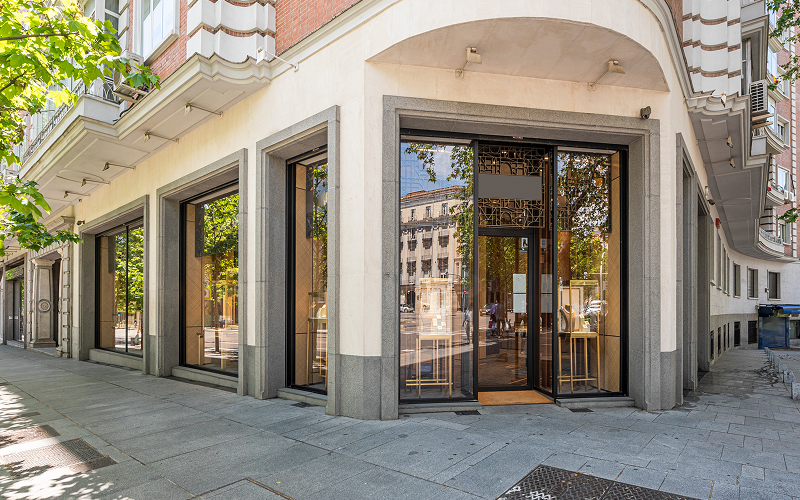
Luxury fashion lives in a constant negotiation between memory and momentum. A brand that relies too heavily on its past becomes a museum; a brand that chases novelty for novelty’s sake becomes noise. Emporio Armani has built its house on the narrow strip of land between those two cliffs. It promises an Armani world—sleek lines, mindful restraint, Italian craft—without enclosing shoppers in formality. Instead, it opens a door into a lifestyle that is lived, not archived.
Singapore, as a market, is compressed and fast-moving, where generational tastes collide within a few square kilometres of retail real estate; that door needs to open for everyone at once: the boardroom veteran who wants quiet authority, the thirty-something toggling between work and wellness, and the TikTok native who measures cultural currency in seconds.
The way Emporio Armani in Singapore appeals to different generations of shoppers is not simply about product ladders or channel splits. The brand’s playbook is subtler. It ties heritage to context: the clean Armani line adapted to a tropical climate; the logo T-shirt reinterpreted through the lens of streetwear and sneaker culture; the athleisure capsule that still looks like it belongs beside a blazer. It ties message to medium: visual storytelling that works as well on a Marina Bay storefront lightbox as it does on a phone screen viewed on the MRT. And crucially, it ties aspiration to access: shoppers can step into the Armani feeling at many price points and in multiple categories, from tailoring and leather goods to watches, eyewear and fragrance. Emporio Armani in Singapore is therefore more than a retail footprint. It is a multi-generational conversation about style, identity and pace of life.
Explore this brand strategy in detail, showing how Emporio Armani in Singapore is not only surviving but thriving in an era where brand loyalty is fragmented and consumer attention is harder than ever to capture.
The Legacy of Armani and the Vision of Emporio Armani
It helps to ground everything in the Armani origin story before we segment shoppers by age. When the late Giorgio Armani softened the men’s jacket in the late 1970s and early 1980s, he did more than change a garment; he changed how authority could look and feel. The shoulders relaxed, the drape breathed, the lines simplified. Power needn’t be padded; it could be precise. That philosophy—minimal embellishment, maximum intention—became an international language, spoken by films, red carpets, and magazine covers for decades. It remains the grammar behind every Armani line.
Emporio Armani was created in 1981 as the fluent, youthful dialect of that language. Think of the Armani universe as a skyline: Giorgio Armani, the grand civic building; Armani Privé, the gallery with its rarefied exhibitions; Armani Exchange, the pop-art billboard; and Emporio Armani, the bridge—solid, elegant, enabling movement. The “bridge” metaphor matters since Emporio Armani’s purpose has always been to offer the Armani look—clarity of line, a certain quiet confidence—in forms that are easier to wear, easier to style, and easier to buy. A logo bomber over a crisp tee, a tapered trouser that works with white trainers, a leather cross-body that reads sophisticated rather than serious: these are recognisably Armani, simply tuned for everyday life.
Context sharpens the vision. Amidst the city-state’s heat and humidity, the Emporio cut’s lightness is not a theoretical win; it is a practical one. Fabrics that hold structure without weight; silhouettes that allow movement on a lunchtime walk from Raffles Place to Telok Ayer; knit polos that carry you from an air-conditioned meeting room to an early dinner at Dempsey—these are not fringe concerns but central use-cases. The brand’s modernity is also social: imagery that shows diverse casting and real-world motion; stores that feel like galleries you can touch; service that is attentive without choreography. All of these compose the propositioning of Emporio Armani in Singapore: the Armani idea translated into a city that prizes efficiency, worldliness and a polished ease.
ALSO READ: Your Emporio Armani Style Cheat Sheet In Singapore

How Emporio Armani Appeals to Gen X
Professional identity and status—authority without a loudhailer
Gen X remembers the moment when Armani defined cool competence on screen and then in offices worldwide. That memory still has power. Clothing is not a costume for professionals running teams, sitting on committees, or advising clients; it is unspoken punctuation. A cleanly cut Emporio blazer in anthracite or navy, a fine-gauge knit layered under it, a leather brief in a matte finish—these items state seniority softly. They neither chase trends nor resist time; they simply look correct. Once you step out of a lift at Republic Plaza or into a conference at Suntec, the suit is not asking for attention; it is signalling that attention to detail is already part of the job.
Luxury without excess—investment logic for seasoned buyers
Gen X, as the cohort with the deepest cumulative buying experience, tends to allocate spend where quality and longevity intersect. Emporio Armani in Singapore is built for that calculus. The design language is consistent enough that a jacket from five years ago still “speaks” to a shirt from this season. Leather goods age with dignity. Watches in steel or leather avoid novelty case shapes that age out; they prefer proportion and legibility. Modularity matters in the city-state, where wardrobes often need to do more with less space; Emporio trousers, shirts, and blazers inter-combine across seasons without looking mismatched. The result is a wardrobe that amortises gracefully.
Lifestyle positioning—category breadth that reads as one voice
Gen X also appreciates coherence across categories because it feels like competence. Once a fragrance, a pair of sunglasses, and a belt appear to be authored by the same mind, the brand’s reliability grows. The lifestyle range of Emporio Armani in Singapore turns “getting dressed” into a quiet ritual: apply a scent that is warm without heaviness for the climate; choose eyewear that sits cleanly on the bridge; slide a belt whose hardware does not glare under office lighting. These micro-choices are not vanity; they are care. A coherent brand vocabulary makes them easier.
Loyalty and value—continuity that becomes tradition
One reason Emporio Armani in Singapore retains Gen X loyalty is that it does not move the goalposts for the sake of movement. The house line evolves, it does not gyrate. That stability lets personal history form: the first Armani suit for a milestone meeting; the leather weekender for a twenty-year anniversary trip; the fragrance a partner still recognises in a crowded room. That history becomes an introduction, particularly for Singaporean families where shopping is often multi-generational. A parent who trusts Emporio Armani’s tailoring standards will happily bring a university-age son or daughter to the store for a first “real” blazer, and in that handover, loyalty replicates.
How Emporio Armani Connects with Millennials
The career-lifestyle blend—wardrobes that multitask
Millennials came of age with broadband and budget flights, productivity apps and Pilates. Their wardrobes have to commute as much as they do. Emporio Armani in Singapore solves for the hinge points of a day. A stretch-cotton trouser with a sharp taper can pair with a loafer for office hours, then work with a sneaker for dinner at Keong Saik. A softly structured jacket handles air-con without looking stiff outside. EA7 sits at the centre of this rhythm: a training top for a pre-work gym session that still looks considered at a Saturday brunch; a pair of lightweight track trousers that read smart-casual when styled with a crisp tee. The appeal, for Millennials, lies in respecting the body’s movement without compromising the eye’s expectations.
Digital and experiential storytelling—moments that feel earned
Millennials do not reward generic marketing; they reward point of view. Emporio Armani’s digital presence uses short-form video, behind-the-scenes craft clips, athlete partnerships and quick styling edits to deliver exactly that. The content invites ownership: here’s how a trouser breaks at the shoe, here’s a collar that frames the jawline, here’s how the knit breathes. Story snippets that inform as well as inspire are welcomed in a city where workdays are long and leisure windows smaller. Crucially, when Millennials enter a local boutique after seeing content, the in-store experience mirrors the narrative: knowledgeable staff, clear zoning of product stories, fitting rooms with enough space to test movement. The brand’s promise holds end-to-end.
Accessible aspiration—entry points without compromise
Millennials are value-sensitive by experience, not stereotype. They like luxury that respects their spreadsheet. The price architecture of Emporio Armani in Singapore answers that by offering curated entry points that feel complete rather than compromised. A watch with a balanced dial and reliable movement, a pair of sunglasses with good hinge feel and crisp optics, a fragrance that performs in tropical conditions without becoming cloying—each purchase delivers the Armani effect in a self-contained way. Over time those entries build toward tailoring, leather and footwear, but they never feel like “meanwhile” buys. This characteristic matters for shoppers navigating property, travel, and savings goals in this luxurious city.
Responsibility and materials—values that feel lived-in
Millennials also ask what a garment means beyond its look. The expectation is not merely for a sustainability page on a website but for choices you can feel: fabrics that are lighter on the planet, supply information that is easier to understand, a design approach that favours longevity. The minimalism offered by Emporio Armani in Singapore becomes an asset here. Once a garment avoids superfluous detail, it encourages longer wear; when a brand maintains a steady silhouette, pieces stay in circulation. Durability is sustainability’s practical twin, particularly in a city where wardrobes must manage heat, humidity and frequent laundering. The combination makes sense to Millennial shoppers who want to “do right” without turning style into homework.
ALSO READ: The Signature Elements Behind Gucci Beauty’s Most Coveted Products

How Emporio Armani Engages with Gen Z
Expression first—identity in motion
Style is not a uniform for Gen Z; it’s a playlist. One day calls for a graphic tee tucked into tailored trousers; the next asks for a nylon overshirt over shorts and crew socks; the evening ends with a fragrance cloud that says “my turn”. Emporio Armani in Singapore answers that appetite for identity-play by offering pieces that anchor an outfit without locking it down. A logo tee with a considered cut sits under a blazer as easily as it photographs with a bomber. A pared-back trainer reads clean with a suit and light with sweats. The effect is permission: build a look, break a rule, still look like you belong.
Digital native touchpoints—speaking in the right tempo
Gen Z meets brands where the scroll lives. Short videos, honest try-ons, creators whose wardrobes look like real wardrobes—these are the passports to attention. The social presence of Emporio Armani in Singapore leans into that reality with close-ups on fabric movement, quick swaps that demonstrate silhouette, and collaborations that plant the brand inside the culture Gen Z already trusts. Remember, in Singapore, where the commute is also a content window, that means a look can be discovered on the Circle Line and tried in person at ION Orchard half an hour later. Speed and physicality converging.
Collaboration energy—plug-ins to the culture loop
Cultural relevance is not a favour Gen Z grants; it is a current that brands have to join. Emporio Armani’s collaborations across sport, music and creative communities operate as plug-ins to that loop. The brand’s athletic partnerships make performance silhouettes feel fashion-legitimate; creative tie-ins make fashion silhouettes feel culturally tuned. These cross-overs for a young shopper who spends as much time in digital space as physical are proof that the brand can move with the beat without losing the bassline.
Access points that feel real—owning a slice of the signal
Gen Z’s budgets vary wildly, but the desire to participate is consistent. Emporio Armani’s entry items—caps with just-right proportions, small leather goods with quiet hardware, fragrances that read “fresh” rather than “forced”, logo tees that sit neither boxy nor bodycon—let younger shoppers own a slice of the signal. That slice is a confidence tool as well as a style piece. You can walk into a first interview wearing an Emporio tee under a simple blazer and feel, genuinely, “this looks like me”.
Omnichannel Strategy
The previous sections explain what Emporio Armani in Singapore says to different generations, this one explains how it is heard—with the local context compressing every step of the brand journey. Shoppers discover, evaluate, try and purchase within a few city blocks or a few thumb movements. Winning here means building a friction-light omnichannel loop that still feels like luxury at every click and touch.
Start with discovery. Content, in a mobile-first city, must be optimised for portrait-mode speed: outfits demonstrated in seconds, fabric qualities shown with macro video, styling suggestions that feel specific (“wear this knit on its own with tapered trousers for a lunch at Telok Ayer; add the blazer for a client meeting in the afternoon”). Since air-con interiors and outdoor heat alternate throughout the day, showing how a jacket breathes or a knit resists cling is not niche; it is decision-critical. Emporio Armani in Singapore wins attention since it respects those micro-realities.
Move to evaluation. Stock transparency and size guidance reduce guesswork. A shopper who sees that a particular trouser cut rests cleanly on a standard trainer and understands that the waist sits slightly higher will step into a fitting room with intent rather than doubt. Appointment booking for busy professionals, quick pick-up options for social-calendar shoppers, and seamless returns for size exchanges turn time-pressed hesitations into completions. None of this is flashy; it is simply respectful of the local clock.
Now consider the store experience. Retail theatre here is not spectacle but service fluency. A greeting that reads the shopper’s pace; stylists who can switch from heritage storytelling for a Gen X buyer to silhouette hacking for a Gen Z creator; fitting rooms with mirrors that show true colour and enough bench space for a tote; point-of-sale that securely retrieves online wishlists—all of this makes the boutique feel like a continuation of the phone, not a contradiction. The environment should be gallery-calm but never hushed; the lighting should flatter skin tones typical in the region’s multicultural population; the mannequins should show the city’s dress codes in action: sharp-casual, smart-athleisure, relaxed evening.
Finally, loop back to loyalty. Communications that remember preferences (cuts, sizes, categories), invitations that are anchored in real life (a styling evening timed before festive seasons, a tailoring clinic that teaches fit), and after-sales that solve rather than stall (speedy alterations, cleaning advice for climate) turn buyers into returners. Across generations, that loop matters differently: Gen X wants reliability; Millennials want relevancy; Gen Z wants recognition. Omnichannel makes it possible to deliver all three without splitting the brand’s personality.
ALSO READ: Why Dior Remains a Top Luxury Fashion Destination in Singapore

The Transgenerational Appeal
Transgenerational appeal sounds like a buzzword until you watch it happen at a single display: a Gen X father assessing stitch density on a leather belt, a Millennial sister checking how a trouser tapers at the ankle, a Gen Z brother testing how a tee photographs in mirror mode. Three ages, one rack, zero friction. What makes this choreography work for Emporio Armani in Singapore?
First, the brand’s core design tenets are universal. Italian minimalism is generous to individual taste: it creates space for the wearer to decide who they are on a given day. Clean lines and restrained palettes have a democratic quality. A navy jacket is just a simple navy jacket until the wearer styles it. Second, the brand’s proportions are modern without being narrow. Trousers taper, but they do not constrict; shirts follow the line of the body, but they do not announce it; outerwear suggests shape without building architecture. That openness keeps cross-generational usage high.
Third, category architecture invites shared exploration. Tailoring and leather satisfy the instinct for permanence. Sneakers, caps and small leather goods satisfy the instinct for play. Fragrance satisfies the instinct for memory. The range of Emporio Armani in Singapore turns the store into a family shopping commons. A father may choose a cardholder for a graduating child; a sibling may choose a scent for a sibling moving into a new role; partners choose each other’s sunglasses, test them together in the mirror, step outside the boutique to check the lenses in natural light, and step back in to complete the purchase. The brand’s environment and assortment support that choreography.
Finally, the aesthetic coherence across categories means that no purchase feels like an orphan. The belt knows the shoe; the tee knows the trouser; the watch knows the cuff. That integrity is the quiet thread running through Emporio Armani’s multi-generational conversation. Once “Emporio Armani Singapore” appears on a receipt, the name stands not for a single product but for a system that helps different ages make sense of their own style.
Challenges in Multi-Generational Branding and What Brands Can Learn from Emporio Armani
Serving three generations is not a simple multiplication; it is often a set of trade-offs. The temptations are obvious: to chase youth until the base wobbles, or to double down on heritage until curiosity drains away. Emporio Armani in Singapore suggests a middle path, but the difficulty of walking it shouldn’t be underestimated.
The first challenge is avoiding brand dilution. Once a house offers athleisure, tailoring, denim, leather, fragrance, watches and eyewear, the risk is a noisy orchestra. Emporio Armani in Singapore mitigates this with a strict conductor’s baton: minimalism of line, polish of finish, consistency of tone. Logos appear but do not shout; hardware is strong but not shiny; silhouettes change but do not jerk. The lesson, for any brand learning from this, is not “do less”; it is “say less, better”.
The second challenge is competing with niche and micro-trend players. Gen Z in particular can discover a new label at noon and wear it by night. Speed and micro-communities are the terrain. Emporio Armani in Singapore does not try to outrun that tempo with novelty for novelty’s sake. Instead, it participates by collaboration—entering conversations where it can contribute, not dominate—and by building pieces that welcome remix culture. A logo tee or nylon overshirt that sits comfortably under tailoring is not a capitulation to streetwear; it is a bridge that invites experimentation while keeping the Armani line visible.
The third challenge is navigating value frameworks that diverge by age. Gen X emphasises reliability and dignity; Millennials emphasise responsibility and use-value; Gen Z highlights expression and cultural literacy. A single message cannot carry all that weight. Emporio Armani’s answer is platformed storytelling: the same garment explained through different angles. A blazer can be framed as durability for Gen X, versatility for Millennials, and customisability for Gen Z. Each frame is true; none contradicts the others. The tactic, for brands studying the method, is to resist the urge to craft one “master narrative” and instead craft a set of true stories for real audiences.
The fourth challenge is localising without caricature. That means recognising climate realities, shopping rhythms, gifting culture and space constraints without dressing them up as exotic. Emporio Armani’s light fabrics, smart-casual styling cues, fragrance calibrations for humidity, and omnichannel services that respect time are forms of localisation that feel natural rather than performative. The high-level lesson is to anchor localisation in utility first and storytelling second.
Finally, a difficult but critical challenge is protecting long-term desirability. Accessibility is a strength only when aspiration remains intact. Pricing tiers that are thoughtfully spaced, quality control that never wavers, store environments that signal care and calm—these are the cornerstones that keep the brand’s centre of gravity steady while different age groups orbit at different speeds.
The takeaways from Emporio Armani in Singapore are practical: keep a disciplined design language; let categories talk to each other; tell tailored truths to each generation; build omnichannel that speeds decisions without rushing the mood; and localise by solving real problems. None of these are headline-friendly tricks. All of them are operational habits. And habits, repeated, become brands.
Conclusion
Ultimately, Emporio Armani’s multi-generational resonance in the city-state is neither an accident nor a single campaign success. It is the accumulation of precise choices: a design code that remains legible across decades; a category map that lets a first fragrance and a fifth blazer feel like they belong to the same story; digital content that educates as much as it excites; service that treats time as the luxury it is in a city that runs fast. The brand, for Gen X, offers quiet authority and continuity Meanwhile, for Millennials, it offers wardrobes that multitask and values that feel lived rather than lectured. Emporio Armani in Singapore for Gen Z offers a stage that moves with them, not in front of them.
The through-line is simple: Armani’s minimalism is not absence; it is intention. It gives each wearer room to define themselves, which is why three generations can meet at a single rack and all find something that looks like them. That is the essence of transgenerational design: not a lowest common denominator, but a highest common clarity.
While shopper expectations evolve toward more omnichannel fluidity, more responsible materials, and faster cultural feedback loops the brands that will last are those that can hold a centre while inviting movement. Emporio Armani in Singapore shows how to do that with discipline and style. It is a bridge brand in the best sense: connecting ages, categories, contexts and days, so that what you wear says only what you want it to say, exactly when you need it to be said.
With Giorgio Armani’s passing, this brand approach and clarity serves as an inheritance and responsibility—the discipline of design he left behind is now what sustains Emporio Armani’s future in Singapore and beyond.
Visit TrendSetters and discover how iconic labels continue to shape style narratives in the Lion City.